
Putting Green on a Lawn vs. a Concrete Atrium Floor
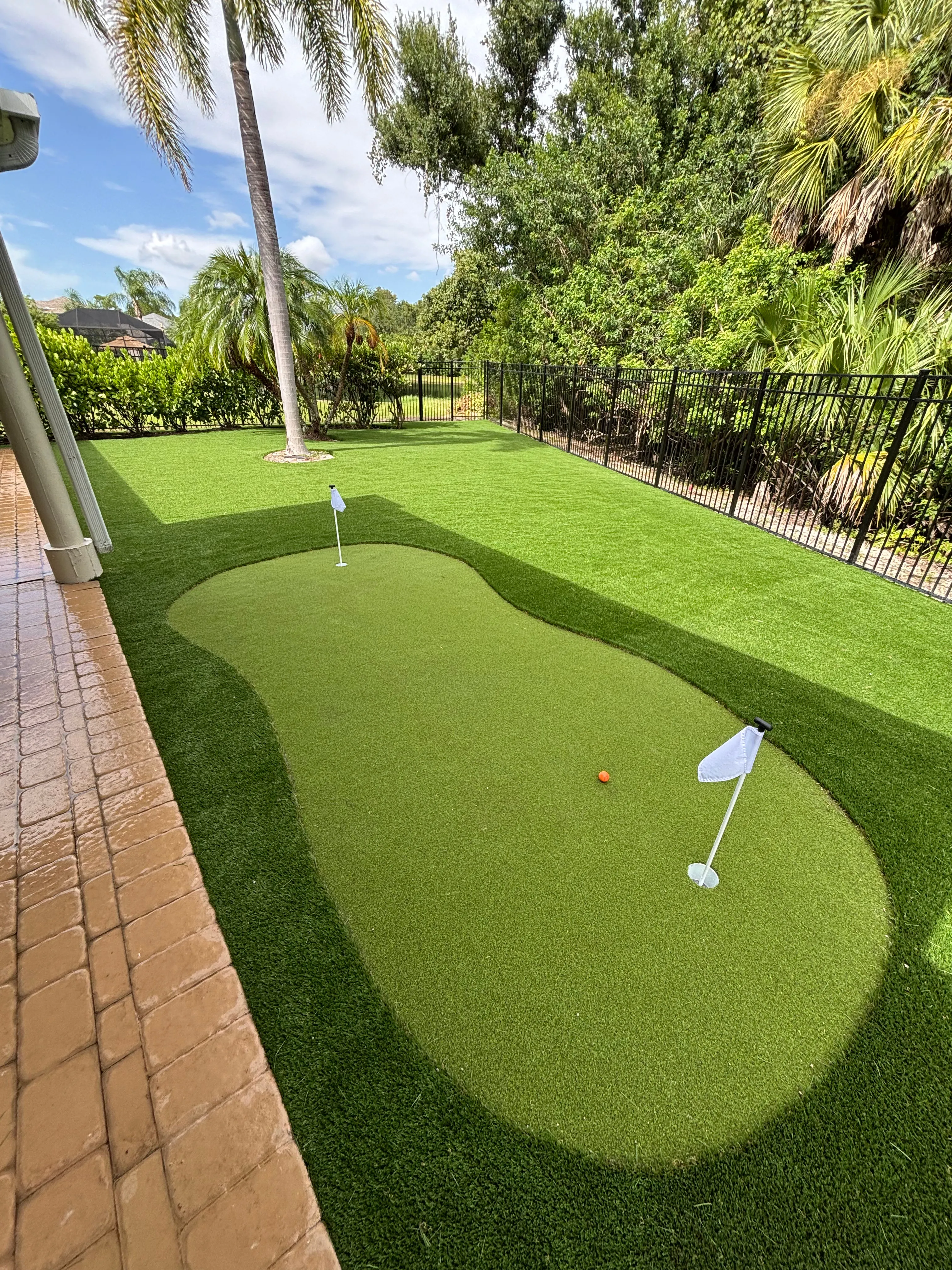
A putting green works on both a backyard lawn and a concrete atrium floor, and the surface underneath sets the prep work, the layers, and what the estimate covers. The turf on top can look the same in either space.
Homeowners in Bradenton and Sarasota often ask us to price both at once, for example a lawn and a large protected atrium on concrete. Here is how the two spaces compare so you know what to expect from each.
A lawn green starts with a compacted base under the turf
A green built on a lawn typically replaces the grass and the top layer of soil with a compacted stone base, then adds the turf over it. That base is what keeps the surface firm and the ball true.
Florida’s sandy soil drains well, which helps. Shade is the bigger variable. Oaks and palms drop leaves, fronds, and roots into the spot you pick, and roots near the surface can disturb the base over time, so we look at where the trees sit before settling on a location.
Open yards also take the full weight of the Gulf Coast’s rainy season and summer sun. The green sheds water through its base, and you skip mowing and watering the area altogether.
A concrete atrium already gives you a firm, flat base
Concrete saves the digging, so the work shifts to the condition of the slab. Cracks, low spots, and uneven joints show up in the way a ball rolls, which makes the slab inspection the most important step.
A protected atrium also changes the weather picture. Rain stays off the green, and direct sun is limited, so the turf surface stays cooler than it would in an open yard in July. Water from cleaning or wind-blown rain still needs somewhere to go, so the slab’s drain points and slope matter as much as they would outdoors.
Side by side, the surface changes the prep and not the look
| Lawn | Concrete atrium | |
|---|---|---|
| Base | Dug out and rebuilt with compacted stone | Existing slab, checked for level and cracks |
| Drainage | Water drains through the base into the soil | Water needs the slab’s slope and drain points |
| Sun and rain | Full exposure to Florida summer and rainy season | Covered, with limited direct sun |
| Common trouble spots | Tree roots, shade, low corners of the yard | Slab cracks, uneven joints, standing water |
| Edges | Finished against lawn, beds, or hardscape | Finished against walls, doors, and thresholds |
A 10 by 15 foot space holds a useful green
Some customers ask about a 10 by 15 foot area behind a manufactured home. That is 150 square feet, enough for a chipping and short putting setup.
Small spaces work best when the green follows the shape of the area. If you live in a community with its own appearance rules, check them first, since HOAs and parks often have a say in what goes in the yard.
Choose the lawn or the atrium based on how you will practice
Choose a lawn green when
You want the most room, since a yard usually allows longer putts and a larger shape. You also want the green to blend with the rest of your turf. If you are planning artificial turf for the whole yard, our artificial turf installation page covers that side, and a green can sit alongside it.
Choose the atrium when
You want to practice in any weather without sun or rain on the green. You already have a slab in good condition. You are a seasonal resident who leaves for part of the year, since turf in a covered space needs no mowing or watering while you are away.
You can read more about how we build these on our putting greens page, and the project photos show finished work.
Two spaces get two estimates, and you can request both together
The lawn and the atrium will not price the same, because each has different prep. Size, slab condition, access, and base work all move the number, and we don’t quote figures in blog articles. Our pricing page explains what sets the cost, and financing is available if you want to spread the project out.
When you request an estimate, describe each space, its approximate size, and whether it is soil or concrete. If a small dog lives with you, mention that too, because pet turf is a separate installation from a green. We work out of Bradenton and cover Lakewood Ranch, Sarasota, Venice, and nearby Gulf Coast towns.
Tell us about both spaces and request your free estimate.